

A simple guide to asset and liability basics
In the world of finance, whether for a global corporation or your personal budget, everything begins with two fundamental concepts: what you own and what you owe. Grasping the asset and liability basics is the first and most critical step toward achieving financial literacy. These two elements are the building blocks of your financial world, forming the basis of your net worth and providing a clear, honest snapshot of your current financial health. Understanding them isn’t just an accounting exercise; it’s an act of empowerment that allows you to make smarter decisions, plan for the future, and take control of your financial destiny.
The Balance Sheet: Your Financial Snapshot
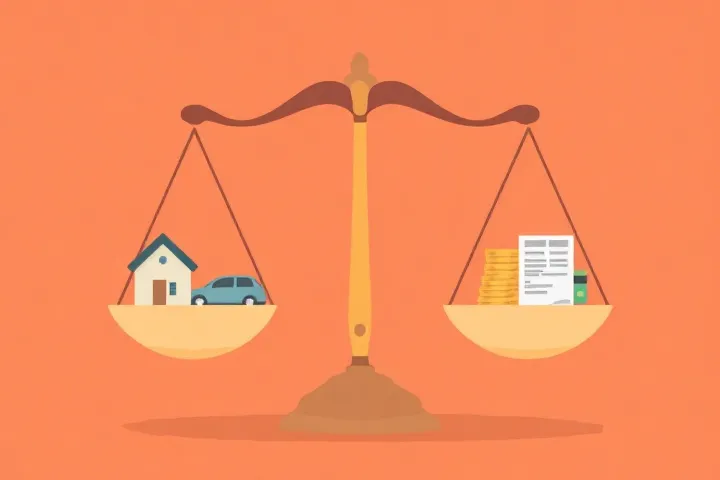
The primary stage where assets and liabilities are presented is the balance sheet. Think of it as a perfectly balanced scale. On one side, you have all your assets (the things that provide economic value). On the other side, you have all your liabilities (your financial obligations to others) plus your equity (your net worth, or the residual value). For a business to be financially sound, these two sides must always be in balance. This foundational document, as explained by regulators like the U.S. Securities and Exchange Commission (SEC), provides a point-in-time picture of a company’s financial position.

Understanding Assets: What You Own
An asset is any resource with economic value that an individual or corporation owns with the expectation that it will provide a future benefit. Assets are the resources that help you generate revenue and operate. They are typically categorized based on how easily they can be converted into cash, a concept known as liquidity.
Current Assets: Your Short-Term Resources
Current assets are all the assets of a company that are expected to be sold, consumed, used, or exhausted through standard business operations within one year. They are highly liquid and crucial for funding day-to-day operations.
- Cash and Cash Equivalents: This is the most liquid asset, including physical currency, bank account balances, and short-term money market funds.
- Accounts Receivable: The money owed to your business by customers for goods or services already delivered but not yet paid for.
- Inventory: The raw materials, work-in-progress, and finished goods that a business holds for sale.
- Prepaid Expenses: Money you’ve paid in advance for future goods or services, like an annual insurance premium.
Fixed (Non-Current) Assets: Your Long-Term Investments
Fixed assets, also known as long-term or non-current assets, are investments that are not expected to be converted into cash within a year. These are the tools and infrastructure you use to generate revenue over the long haul.
- Property, Plant, and Equipment (PP&E): This includes land, buildings, machinery, company vehicles, and office furniture. These assets typically depreciate over time (except for land).
- Intangible Assets: These are non-physical assets that still have value, such as patents, trademarks, copyrights, and brand recognition (goodwill).
- Long-Term Investments: Stocks, bonds, or real estate held for more than one year.
Understanding Liabilities: What You Owe
A liability is a financial obligation or debt owed to another person or entity. It represents a future sacrifice of economic benefits that the business is obliged to make. Liabilities are claims against your assets.
Current Liabilities: Your Short-Term Obligations
Current liabilities are debts that are due within one year. Managing these is critical for maintaining healthy cash flow and a good credit standing.
- Accounts Payable: The money your business owes to its suppliers or vendors for goods and services received on credit.
- Credit Card Debt: Balances owed on business credit cards.
- Accrued Expenses: Expenses that have been incurred but not yet paid, such as employee wages or taxes.
- Short-Term Loans: Portions of long-term debt that are due within the next 12 months.
Long-Term Liabilities: Your Future Commitments
Long-term liabilities, or non-current liabilities, are financial obligations that are due more than one year in the future.
- Long-Term Loans: This includes traditional business loans, mortgages on property, and other financing that extends beyond one year.
- Bonds Payable: A form of long-term debt used by corporations to raise capital from investors.
- Deferred Tax Liabilities: Taxes that have been accrued but will not be due for more than a year.
The Accounting Equation: Bringing It All Together
The relationship between these elements is elegantly captured in the accounting equation, the bedrock of double-entry bookkeeping:
Assets = Liabilities + Equity
This formula must always remain in balance. Equity (also known as net worth for individuals) is the value of the assets remaining after all liabilities have been paid. It represents the owner’s stake in the company. For further reading, resources from financial education hubs like Investopedia offer a deep dive into this core principle.
A Practical Example: A Freelance Graphic Designer’s First Balance Sheet
Let’s consider “Creative Canvas Studios,” a new freelance business run by Emily. To understand her financial position, she creates a simple balance sheet.
- Assets: She has $8,000 in her business bank account (Current Asset) and a high-end computer and software valued at $4,000 (Fixed Asset). Her total assets are $12,000.
- Liabilities: She has a $1,500 balance on her business credit card for a new monitor (Current Liability) and a $5,000 long-term loan from her family to start the business (Long-Term Liability). Her total liabilities are $6,500.
- Equity Calculation: Using the equation, her equity is Assets ($12,000) – Liabilities ($6,500) = $5,500. This $5,500 represents her ownership stake in the business.
Insight from a Certified Public Accountant (CPA)
We spoke with Dr. Michael Chen, a CPA and financial strategist who has advised startups for over 20 years. “New entrepreneurs get excited about accumulating assets—a new office, fancy equipment. But savvy owners focus on the *quality* and *productivity* of those assets,” Michael explains. “A $50,000 piece of machinery that sits idle 90% of the time is a poor asset. The key question isn’t just ‘What do I own?’ but ‘How hard are my assets working for me?’ Mastering the asset and liability basics is the first step, but mastering asset efficiency is what builds truly profitable enterprises.”
Care, Caution, and Recommendations
When analyzing your financial health, it’s crucial to be realistic. Assets like vehicles and equipment depreciate, meaning they lose value over time; this must be accounted for. Furthermore, not all debt is created equal. A low-interest loan used to purchase an income-producing asset is “good debt.” High-interest credit card debt used for non-essential expenses is “bad debt” that can quickly erode your equity. It is vital to regularly review your balance sheet—at least quarterly—to monitor your financial health, manage debt levels, and make informed decisions, a practice highly recommended by mentorship organizations like the SBA.
Alert: Pay close attention to **liquidity**. Having a high net worth on paper is not the same as having cash on hand. If all your assets are illiquid (like real estate or specialized equipment), you could face a cash flow crisis even if you are technically “rich.” Always maintain a healthy level of liquid assets to cover short-term liabilities and unexpected emergencies.
By regularly reviewing and understanding the interplay between what you own and what you owe, you move from being a passive business owner to a strategic financial director. This clarity is the true foundation of sustainable growth.

Frequently Asked Questions (FAQ)
Can something be both an asset and a liability?
No, a single item cannot be both at the same time on the same balance sheet. However, an item like a building can be an asset to its owner, while the mortgage on that building is a liability.
How do assets and liabilities relate to my net worth?
Your net worth (or equity, in business terms) is the direct result of subtracting your total liabilities from your total assets. A positive and growing net worth is a key indicator of financial health. Resources from government bodies like the Consumer Financial Protection Bureau provide simple guides for this calculation.
Is a car an asset or a liability?
This is a common point of confusion. The car itself is an asset because it has monetary value. However, the loan taken out to purchase the car is a liability. For most personal vehicles, it’s a depreciating asset, meaning its value decreases over time, while the loan liability only decreases as you make payments.
Why do I need to track assets and liabilities for my small business?
Tracking them is essential for several reasons: it allows you to calculate your business’s equity, provides the necessary information for applying for loans, helps you manage debt and cash flow, and is required for accurate tax reporting. This process is a core part of financial management, a topic often covered by accounting bodies like the AICPA.
What is owner’s equity?
Owner’s equity is the owner’s share of the assets of a business. It’s the amount left over for the owner after all liabilities have been paid off. It represents the owner’s investment in the company plus any retained earnings.
Mastering the asset and liability basics is the starting point for any meaningful financial conversation or strategy. By clearly understanding what you own, what you owe, and the resulting value of your stake, you gain the clarity needed to navigate the complexities of finance and confidently build a secure and prosperous future.
Related posts:
 Incorporating Your Small Business: Advantages and Considerations
 Strengthening Business Integrity: The Role of Internal Control
 Crafting an Impactful Resume: Four Essential Steps
 Unlocking the Benefits: Incorporating a Company Offshore
 Mastering Leadership in Turbulent Times: Five Invaluable Strategies
 Maximize Your Consulting Income: Diversification Strategies for Success