
Why You Should Never Flush Tampons: The Ultimate Guide
It’s a scenario that plays out in bathrooms everywhere: a moment of hesitation, a quick glance around for a trash can, and the tempting thought that the toilet offers a swift, discreet, out-of-sight solution. The question—can you flush tampons?—seems minor, but the answer has major implications. The convenience of a single flush hides a cascade of destructive consequences that can lead to devastating plumbing blockages, costly municipal repairs, and lasting environmental damage. This guide will take you on the journey of a flushed tampon to reveal precisely why this common habit is one you need to break today.
The Unmistakable Answer from the Experts: Just Don’t Do It
Let’s eliminate any ambiguity. There is no grey area on this topic among professionals who deal with our hidden infrastructure. Plumbers, wastewater engineers, and sanitation departments are unanimous: you must never flush tampons down the toilet. This isn’t a suggestion; it’s a critical rule for maintaining a healthy plumbing system. Tampons are, by their very nature, designed to be absorbent and structurally robust. They expand when they come into contact with liquid and are engineered to hold together. This makes them the perfect object to create a stubborn, costly, and disgusting clog, as they behave in the exact opposite way that toilet paper does, which is designed to dissolve into tiny fibers almost instantly.
The Destructive Journey of a Flushed Tampon
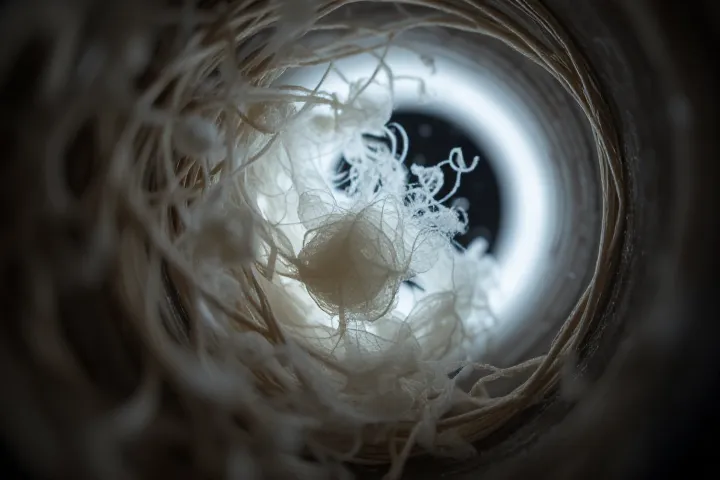
To truly understand the damage, you need to visualize the path a tampon takes after it disappears from the toilet bowl. It is not a smooth ride to a treatment plant but a hazardous obstacle course through a network of pipes that were never designed to handle solid waste.
Stage 1: The Trap in Your Home’s Plumbing
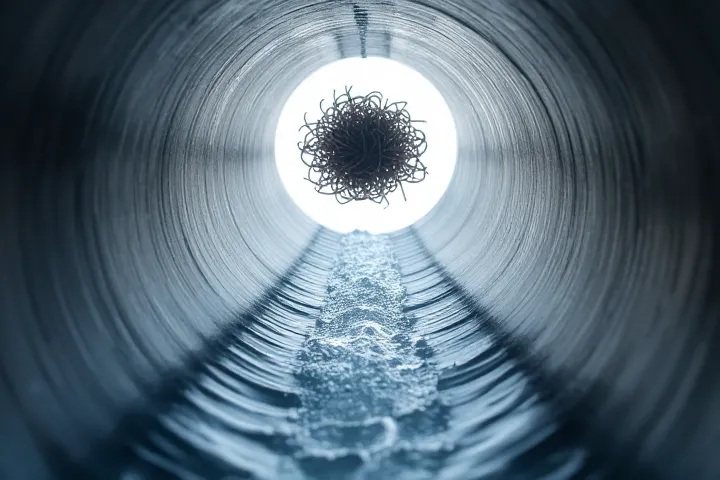
Immediately after the flush, the tampon must navigate your home’s internal plumbing. Its first challenge is the S-shaped pipe directly beneath the toilet, known as the P-trap, which holds water to block sewer gases. Because of its curves, the P-trap is a common spot for a swollen tampon to get lodged. If it makes it past that, it enters the main drain line (or sewer lateral) that carries all of your home’s wastewater to the municipal sewer or your septic tank. This pipe, often only four inches in diameter, is not a perfectly clean tube. Over years, it accumulates grease, hair, soap scum, and other residue. The fibrous surface of a tampon acts like a hook, snagging on this buildup and instantly starting a blockage that grows with every flush.
Stage 2: The Menace in the Municipal Sewer System
Should the tampon successfully exit your property, it becomes a problem for your entire community. It enters the vast network of municipal sewer mains, where it combines with an endless stream of other flushed-but-not-flushable items: wipes, paper towels, dental floss, and condoms. Here, it tumbles and mixes with fats, oils, and grease (known as FOG) that people pour down their kitchen sinks. This combination of materials congeals into monstrous, solid masses called “fatbergs.” These rock-hard blockages can grow to weigh several tons and block the flow of entire neighborhoods, causing raw sewage to back up into streets and homes. As the U.S. Environmental Protection Agency (EPA) notes, our sewer systems are built to handle a very limited type of waste, and tampons are explicitly not on that list.
Stage 3: The Ecosystem Collapse in Your Septic Tank
For the millions of homes relying on septic systems, flushing tampons is an act of self-sabotage. A septic tank is a carefully balanced, self-contained ecosystem where anaerobic bacteria work to break down organic solid waste. Tampons, even those made of 100% cotton, are not easily broken down by these bacteria. Instead, they sink to the bottom sludge layer or float in the top scum layer, taking up critical volume and disrupting the tank’s function. This means the tank must be pumped far more frequently, at a significant cost. Far worse, the tampon can be swept into the outlet pipe leading to the leach field—the underground area where wastewater is slowly released into the soil. If a tampon clogs this outlet or the perforated pipes of the leach field, the entire system can fail, leading to a foul-smelling and hazardous sewage backup in your yard and a repair bill that can easily exceed $15,000.
The Environmental Ripple Effect of a Single Flush
The damage caused by flushing tampons extends beyond pipes and tanks. When sewer systems are overwhelmed by clogs or heavy rainfall, they can overflow, discharging untreated wastewater directly into rivers, lakes, and oceans. The non-biodegradable items flushed down toilets go with it.
Plastic Pollution from Applicators and Wrappers
Plastic tampon applicators, wrappers, and the plastic strings on some tampons are a significant source of aquatic plastic pollution. They are frequently found during beach cleanups, as documented by organizations like the Ocean Conservancy. These plastics break down into smaller microplastics, which are then ingested by fish, birds, and other marine life, moving up the food chain and causing immense harm to entire ecosystems.
Deconstructing the “Flushable” Lie: Marketing vs. Mechanical Reality
One of the biggest sources of confusion is the “flushable” label found on some products, including certain wipes and, historically, some tampons. This term is a marketing claim, not a scientific or engineering standard. While a product labeled “flushable” might successfully exit your toilet bowl, it does not mean it breaks down in the sewer system. Wastewater authorities across the globe, including the International Association of Plumbing and Mechanical Officials (IAPMO), have stated that these products do not disintegrate and are a primary cause of fatbergs and pump clogs. The standard for a truly flushable product is that it must break down as quickly and completely as toilet paper, a test which tampons and wipes invariably fail.A Real-World Scenario: The $7,500 Plumbing Nightmare
Consider “Jessica,” a renter in a duplex who was never taught otherwise and regularly flushed her tampons. For over a year, she had no issues. Then, her downstairs neighbor reported that their toilet was making strange noises and their shower was draining slowly. A few days later, after a heavy rain, sewage backed up into both apartments. The landlord called an emergency plumbing company, which used a camera to inspect the building’s main sewer line. The footage revealed a massive, dense clog composed primarily of tampons, wipes, and grease. The initial attempt to clear it with a hydro-jet cost $1,200 (note: all financial figures are in US dollars for universal reference). However, the clog was so severe that it had cracked the old clay pipe, requiring a partial excavation of the yard and pipe replacement, bringing the total bill to over $7,500.
Insights from the Front Lines
The Plumber’s Perspective
Maria Rodriguez, a licensed master plumber with 25 years of experience, puts it bluntly: “Your toilet is not a magic portal. Everything you flush has to go somewhere. I’ve pulled things out of pipes you wouldn’t believe, but the most common and destructive clogs are almost always caused by a combination of grease, wipes, and tampons. People don’t realize that a tampon swells to several times its original size. It’s the perfect plug. A single clog removal can cost hundreds, but replacing a collapsed sewer line can bankrupt a family.”
The Wastewater Engineer’s Warning
Dr. Eleanor Vance, a wastewater engineer, adds, “At our treatment plants, we have grinders and screens designed to catch debris. Tampons and wipes clog these screens daily, forcing us to perform dangerous manual cleanouts. Worse, they get tangled in the impellers of our pumps at lift stations, causing them to burn out. A single industrial pump can cost over $50,000 to replace. This is taxpayer money being spent to fix a completely preventable problem, a fact many sanitation agencies like the Los Angeles County Sanitation Districts are trying to publicize.”
The Right Way: Safe, Hygienic, and Discreet Tampon Disposal
Proper disposal is far simpler and more hygienic than dealing with a sewage backup. The “wrap and trash” method is the only one you should ever use.
- Remove the tampon and hold it by the string.
- Wrap it securely. Use several layers of toilet paper, the wrapper from your new tampon, or a purpose-made sanitary disposal bag. This ensures it is contained and discreet.
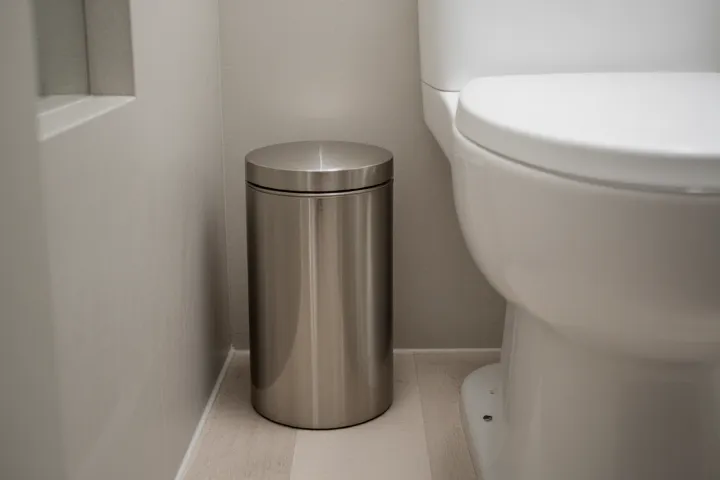
- Place it in a trash receptacle. A lined trash can with a lid is ideal for containing odors and keeping things tidy.
- Wash your hands thoroughly with soap and water.
This method is foolproof, responsible, and shows respect for the home you are in, whether it’s your own or someone else’s.
Care, Caution, and Recommendations
- Care: Practice mindfulness in the bathroom. Make a conscious choice to locate the trash can and use it. If you have guests, ensure a visible and accessible trash can is available in your bathroom to prevent them from flushing items out of necessity.
- Caution: Be highly skeptical of product marketing. As numerous consumer advocacy investigations have shown, the “flushable” claim is not a guarantee of safety for your plumbing. When in doubt, always throw it out.
- Recommendations: Educate your household. Have a clear and open conversation with everyone in your home, including teenagers, about what can and cannot be flushed. This simple discussion can prevent thousands of dollars in future damage.
Alert: Do not be fooled into thinking that flushing just the tampon without the applicator is safe. The cotton part of the tampon is the primary cause of the clog. It is the absorbent, expanding nature of the material itself that poses the greatest threat to your plumbing.
By adopting and sharing these best practices, you become part of the solution, helping to protect a vast and vulnerable infrastructure that we all depend on every day.
Frequently Asked Questions (FAQ)
Are there any tampons that are 100% safe to flush?
No. Zero. Regardless of being labeled “organic,” “100% cotton,” or “biodegradable,” no tampon is safe to flush. They are all designed to absorb liquid and maintain their structure, which is the recipe for a clog.
What if I’ve been flushing tampons for years without a problem?
Consider yourself lucky so far. Clogs build up over time. Each flushed tampon may be contributing to a slow-forming blockage deep in your pipes that will inevitably fail at the worst possible moment. The absence of a past problem does not guarantee future safety.
What should I do if I accidentally flushed a tampon?
One tampon is unlikely to cause an immediate catastrophe in a healthy plumbing system. However, it can become the seed for a future clog. Do not flush anything else besides toilet paper, and monitor your toilets and drains for any signs of slowing or gurgling.
Does hot water or bleach help dissolve a flushed tampon?
No. A tampon is not like a grease clog. It is a fibrous mass, and household chemicals or hot water will have little to no effect on its structure. Attempting to clear a tampon clog with chemicals is ineffective and can be dangerous.
The choice of whether to flush tampons is a critical one with far-reaching consequences. It’s a decision that pits a fleeting moment of convenience against the health of your home’s plumbing, the stability of public infrastructure, and the well-being of our environment. By committing to the simple, responsible “wrap and trash” method, you are making a choice that saves money, prevents disgusting disasters, and contributes to a cleaner, safer water system for everyone.