
How to amplify your sales with 10 key strategies
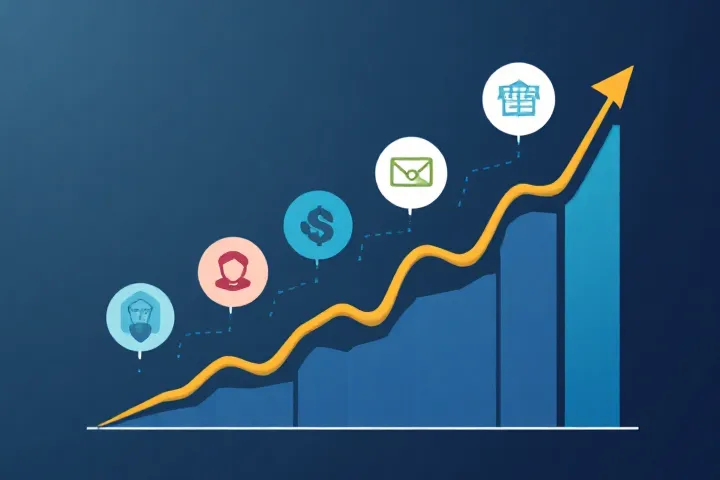
In the competitive landscape of modern business, sustainable growth is not a matter of chance; it’s the result of a deliberate and dynamic sales system. Many businesses fall into the trap of chasing inconsistent wins or relying on a single tactic, only to see their revenue plateau. The key to breaking through is to implement a multi-faceted approach with proven strategies to amplify your sales. This isn’t about aggressive, short-term pushes but about building a robust, customer-centric engine that generates predictable revenue and fosters long-term loyalty. This guide provides a blueprint of ten interconnected strategies that can serve as the foundation for your company’s next stage of growth.
Moving Beyond Tactics: Building a Sustainable Sales Engine
A single sales tactic is a temporary fix; a true sales strategy is a long-term system. The difference lies in building a cohesive process that addresses the entire customer journey, from initial awareness to post-purchase loyalty. A powerful sales engine is integrated, measurable, and customer-focused. As outlined in resources by the U.S. Small Business Administration (SBA), aligning your marketing and sales efforts is fundamental to creating a seamless experience that nurtures leads into becoming high-value customers. The strategies below are not isolated ideas but interlocking gears in this powerful machine.
The 10 Proven Strategies to Drive Revenue Growth
Implementing these strategies requires focus and consistency. Start by mastering one or two, then progressively integrate the others to create a powerful, synergistic effect that drives significant and sustainable revenue growth.
1. Deeply Understand and Niche Down Your Ideal Customer Profile
You cannot effectively sell to everyone. The most successful businesses have an almost obsessive understanding of their Ideal Customer Profile (ICP). This goes beyond basic demographics to include psychographics, pain points, and buying triggers. By niching down, you can tailor your messaging, product, and marketing to resonate deeply with a specific audience, making your sales efforts far more effective than a broad, generic approach.
2. Master the Art of Upselling and Cross-Selling
It is significantly easier and more cost-effective to sell to an existing customer than to acquire a new one. Upselling (encouraging a customer to buy a more expensive version of a product) and cross-selling (offering complementary products) are powerful techniques. The key is to ensure these offers add genuine value and solve a customer’s next logical problem, rather than feeling like a forced sales push. This approach not only boosts average order value but also deepens customer satisfaction.
3. Build a High-Converting Sales Funnel
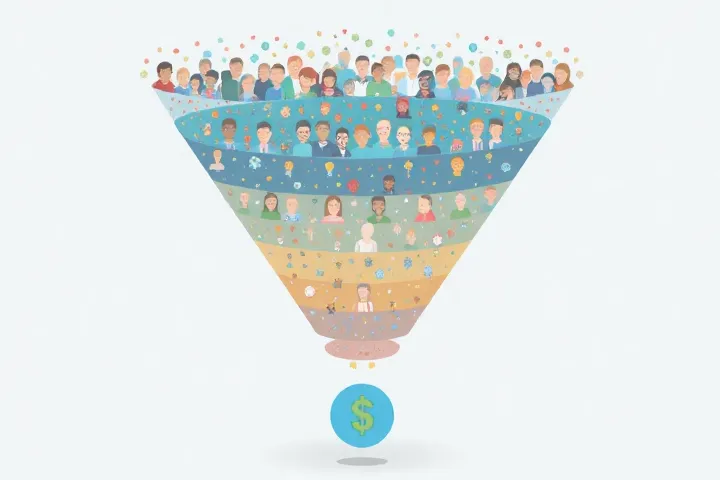
A sales funnel is a visual representation of the journey a potential customer takes from awareness to purchase. A well-structured funnel—typically including stages like Awareness, Interest, Consideration, and Decision—allows you to create targeted content and offers for each stage. By optimizing each step of the funnel to reduce friction and build trust, as detailed in guides by marketing authorities like HubSpot, you can systematically convert leads into customers.
4. Leverage Social Proof and Customer Testimonials
In the digital age, trust is your most valuable currency. Social proof—in the form of reviews, testimonials, case studies, and user-generated content—is a powerful psychological trigger that validates a buyer’s decision. Actively solicit and prominently display testimonials on your website, sales pages, and social media. A compelling case study that details how you solved a specific problem for a client can be more persuasive than any sales pitch.
5. Implement a Strategic Content Marketing Plan
Content marketing is the engine of modern lead generation. By consistently creating valuable, educational, and relevant content (blog posts, videos, webinars, guides), you position your brand as an authority and build trust with your audience long before they are ready to buy. This strategy attracts qualified leads to your ecosystem and nurtures them until they are sales-ready, warming them up for your sales team.
6. Form Strategic Partnerships and Alliances
Identify non-competing businesses that serve a similar customer base and explore opportunities for collaboration. This could be through co-hosted webinars, referral programs, or bundled offers. Strategic partnerships provide a warm introduction to a new, relevant audience, lending you credibility and significantly reducing your customer acquisition costs.
7. Refine Your Value Proposition
Your value proposition is a clear, concise statement of the unique value you provide and how you solve your customer’s problem better than anyone else. It’s the core of your sales messaging. Is it compelling? Is it unique? Constantly test and refine it. A powerful value proposition, as emphasized in business journals like the Harvard Business Review, should answer the question: “Why should I buy from you?”
8. Invest in Customer Retention and Loyalty Programs
Acquiring a new customer can cost five times more than retaining an existing one. A focus on customer retention is not just good service; it’s smart business. Implement loyalty programs, offer excellent customer support, and maintain regular communication. Happy, loyal customers are not only a source of recurring revenue but also become your most effective marketers through word-of-mouth referrals.
9. Empower Your Team with Continuous Sales Training
Your sales team is your front line. Investing in their skills is a direct investment in your revenue. Provide regular training on product knowledge, negotiation, closing techniques, and active listening. A well-trained, confident, and motivated sales team is equipped to handle objections, build rapport, and ultimately close more deals effectively and ethically.
10. Embrace Data and Analytics to Optimize Performance
You cannot improve what you do not measure. Use a CRM and other analytics tools to track key sales metrics: conversion rates, sales cycle length, customer acquisition cost (CAC), and customer lifetime value (LTV). Analyzing this data reveals what’s working and what isn’t, allowing you to double down on effective strategies and fix leaks in your sales process.

A Practical Example: How a B2B Software Company Doubled Its Leads
Consider “SyncUp Solutions,” a B2B software company with a versatile project management tool but flat sales. They decided to implement three key strategies. First, they niched down their ICP from “all small businesses” to “boutique marketing agencies with 10-50 employees.” Second, they launched a content marketing plan focused entirely on that niche, creating webinars on “Agency Profitability” and case studies featuring successful agency clients. Third, they formed a strategic partnership with a popular accounting software used by many agencies. Within nine months, their qualified leads increased by 150%, and their average sales cycle shrank from 90 days to just 45 because incoming leads were already educated and trusted their brand.
Insight from a Veteran Sales Strategist
We spoke with Eleanor Vance, a sales consultant with over two decades of experience helping tech companies scale. “So many businesses are obsessed with the tactics of closing a deal,” Eleanor shared. “The true masters are obsessed with solving the customer’s next problem. They use every interaction to understand the customer’s deeper goals. When you fundamentally shift your team’s focus from ‘making a sale’ to ‘creating a successful outcome for the client,’ your revenue figures naturally follow. The best and most profitable strategies to amplify your sales are always rooted in genuine, undeniable value creation.”
Care, Caution, and Recommendations
While driving for growth, never sacrifice ethics for a short-term gain. High-pressure or deceptive sales tactics can irreparably damage your brand’s reputation. It’s also crucial to create a feedback loop; listen to your customers and your sales team to understand objections and improve your offerings. Ensure your sales and marketing teams are tightly aligned with shared goals and metrics to provide a consistent and positive customer experience from the first touchpoint to the final sale.
Alert: Be cautious of focusing only on top-line revenue. The ultimate goal is profitable growth. Diligently track your Customer Acquisition Cost (CAC) and Customer Lifetime Value (LTV). A strategy that brings in a high volume of low-value, high-churn customers can be less profitable than one that attracts fewer, more loyal clients.
By thoughtfully selecting and implementing these strategies, you create a powerful system for growth. Starting with just one or two of these focused initiatives can build the momentum required for long-term, sustainable success.
Frequently Asked Questions (FAQ)
Which sales strategy is best for a small business with a limited budget?
Focusing on customer retention (Strategy #8) and mastering upselling/cross-selling (Strategy #2) often provide the highest ROI for a limited budget. Additionally, creating highly-targeted content for a specific niche (Strategies #1 and #5) can generate organic leads without a large ad spend.
How long does it take to see results from these sales strategies?
Results vary. Strategies like upselling or running a promotional offer can show immediate results within days. Foundational strategies like content marketing or building strategic partnerships are longer-term plays that may take 6-12 months to build significant momentum but often yield more sustainable results.
What’s the difference between upselling and cross-selling?
Upselling is persuading a customer to purchase a more expensive, upgraded, or premium version of the chosen item. Cross-selling is inviting a customer to buy related or complementary items. For example, upselling a laptop would be suggesting a model with a faster processor, while cross-selling would be offering a wireless mouse or a laptop bag.
How can I improve my team’s sales skills?
Invest in a mix of internal and external training (Strategy #9). Internally, conduct regular role-playing sessions and review sales calls. Externally, bring in professional sales coaches or enroll them in reputable online courses. A culture of continuous learning is key.
Is it better to focus on acquiring new customers or retaining existing ones?
Both are critical, but many businesses underinvest in retention. As research consistently shows (and as highlighted in publications like Forbes), improving retention rates has a massive impact on profitability. A balanced approach is ideal, but never neglect your existing customer base in the hunt for new ones.
Ultimately, successfully executing on these proven strategies to amplify your sales is about building a customer-centric culture. When your entire organization is aligned around delivering value and solving problems, you create an unstoppable engine for growth that not only boosts your bottom line but also builds a brand that customers love and trust. For more insights on structuring your business for growth, resources from entrepreneurship hubs like Inc.com can provide a valuable framework for setting effective goals.
Related posts:
 Incorporating Your Small Business: Advantages and Considerations
 Strengthening Business Integrity: The Role of Internal Control
 Crafting an Impactful Resume: Four Essential Steps
 Unlocking the Benefits: Incorporating a Company Offshore
 Mastering Leadership in Turbulent Times: Five Invaluable Strategies
 Maximize Your Consulting Income: Diversification Strategies for Success