
Do You Need a Passport to Go to Mexico? A Complete Guide for U.S. Citizens
Mexico’s allure—with its sun-drenched beaches, rich cultural heritage, and world-class cuisine—makes it a top destination for American travelers. Its proximity often creates a sense of casualness about the journey, leading to one of the most critical travel questions: do you need a passport to go to Mexico? The answer is not a simple yes or no; it is entirely dependent on your mode of travel. While flying to Cancun has one set of rules, driving across the border for a day trip has another. This definitive guide will eliminate all confusion, detailing the official document requirements for every scenario to ensure your Mexican vacation is safe, compliant, and completely stress-free.
The Essential Rule: Your Mode of Travel Dictates Your Documents
Understanding the fundamental difference between arriving by air and arriving by land or sea is the key to getting your documentation right. International air travel operates under strict global security protocols that make a passport book non-negotiable. Land and sea crossings, however, are governed by the Western Hemisphere Travel Initiative (WHTI), which provides more flexibility for U.S. citizens. Getting this distinction right is the first and most important step in your travel preparations.
Flying to Mexico: The Passport Book is Mandatory
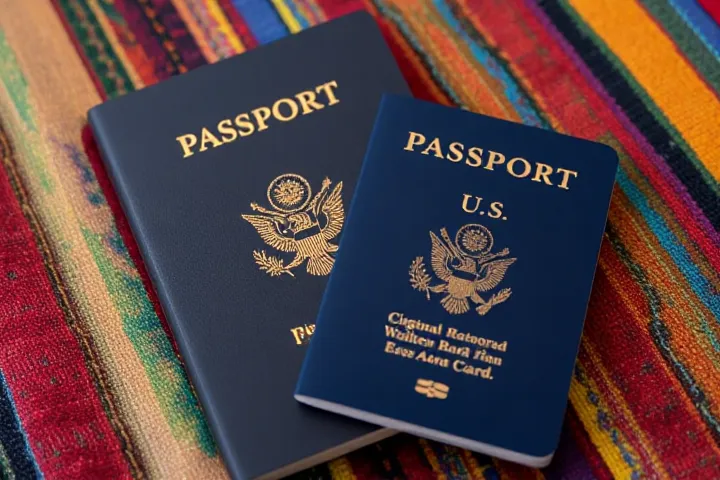
The rule for air travel is absolute and without exception. Every U.S. citizen, including infants, who travels by air to Mexico must present a valid U.S. passport book. This is the only document that will be accepted by airlines for boarding and by Mexican immigration officials upon arrival. A passport card, a birth certificate, or a state-issued driver’s license (including REAL ID) is not sufficient for international air travel. The U.S. Department of State explicitly states this requirement, and you will be denied boarding by your airline if you do not have a valid passport book in your possession.

Driving or Walking into Mexico: More Options, More Complexity
When entering Mexico at a land border crossing (e.g., driving or walking) or arriving by sea on a private vessel or ferry, U.S. citizens have more document options. However, this flexibility comes with important nuances that are crucial to understand.
WHTI-Compliant Documents for Land and Sea Crossings
According to U.S. Customs and Border Protection (CBP), U.S. citizens can use any of the following WHTI-compliant documents to enter Mexico and, crucially, to re-enter the United States by land or sea:
- U.S. Passport Book: The gold standard, valid for all forms of travel worldwide.
- U.S. Passport Card: A wallet-sized card that is a convenient and less expensive option, valid only for land and sea travel to Mexico, Canada, and the Caribbean.
- Trusted Traveler Cards: NEXUS, SENTRI, or FAST cards are accepted for land and sea travel.
- Enhanced Driver’s License (EDL): Available in select states, these licenses contain technology that confirms citizenship and are valid for land and sea crossings.
The Border Zone Exception: What It Is and Why You Shouldn’t Rely On It
For decades, it was common practice for U.S. citizens to make short trips into Mexican border towns (the “border zone,” roughly 20 kilometers) without formally presenting a passport. While Mexican officials may not always ask for documentation for a short visit, this practice is risky and highly discouraged. Mexican law requires all foreign visitors to have proper proof of citizenship, and more importantly, U.S. law requires you to present a WHTI-compliant document to re-enter the country. Relying on lax enforcement can lead to significant delays and questioning by CBP upon your return.
The Crucial FMM Tourist Permit: What Every Traveler Must Know
This is one of the most overlooked requirements for land travelers. If you plan to travel beyond the immediate border zone or stay in Mexico for more than 72 hours, you must obtain a *Forma Migratoria Múltiple* (FMM), also known as a tourist permit. This official document is issued by Mexico’s Instituto Nacional de Migración (INM). You can obtain one at the port of entry or save time by filling it out and paying for it online before your trip. You will need a valid passport or passport card to complete the FMM. Failure to have this permit when traveling in the interior of Mexico can result in fines and detention.
Special Travel Scenarios
Certain travel situations, like cruising or traveling with children, have specific requirements that demand extra attention.
Traveling with Minors
U.S. citizen children under 16 arriving by land or sea can use their U.S. birth certificate (original or copy). However, due to international child abduction concerns, if a minor is traveling with only one parent or with a guardian, you must carry a signed and notarized consent letter from the non-traveling parent(s). The U.S. Embassy in Mexico strongly advises this to prevent potential delays.
Closed-Loop Cruises
For “closed-loop” cruises that start and end in the same U.S. port and only visit Mexico or other WHTI-compliant destinations, a passport book is often not required by the cruise line; a birth certificate and a government-issued photo ID may suffice. However, this is extremely risky. If you miss the ship’s departure from a Mexican port or have a medical emergency that requires you to fly home, you cannot board an international flight without a U.S. passport book.

A Practical Example: Two Sets of Travelers, Two Experiences
The Smiths, a family of four, flew from Dallas to Cancun for a week-long vacation. Each family member had a valid U.S. passport book. Their entry at Cancun International Airport was seamless. In contrast, the Jones couple drove from Arizona to Nogales for what they planned as a quick shopping trip. They only brought their standard state driver’s licenses. While they entered Mexico with no issue, on their way back, U.S. CBP officials detained them for an hour for secondary screening to verbally verify their citizenship, as they lacked WHTI-compliant documents. The delay and stress soured their entire trip.
Expert Insight: Why the Passport Book is Your Gold Standard
David Chen, a former U.S. consular officer with 15 years of service in Mexico, explains, “The passport book is your ultimate proof of citizenship and your key to international assistance. Relying on lesser documents, especially when traveling by land, opens you up to unnecessary risks. A lost passport card on a trip deep into Mexico’s interior creates a huge problem. An emergency requiring a flight home is impossible without a passport book. For a few extra dollars, the passport book provides a level of security and assurance that is simply invaluable.”
Care, Caution, and Recommendations
Before any trip to Mexico, check the latest U.S. Department of State travel advisories for your destination. If driving, be aware of requirements for temporary vehicle importation permits if you plan to travel outside the border zone. Always purchase Mexican auto insurance, as U.S. policies are not typically valid. Be aware of your surroundings and stick to well-traveled areas.
Alert: It is a serious federal crime to bring firearms or even a single round of ammunition into Mexico without a specific, difficult-to-obtain permit from the Mexican military. The penalties are severe, including years in a Mexican prison. U.S. citizens are frequently arrested for accidentally leaving firearms or ammunition in their vehicles. Always double-check your vehicle and belongings before crossing the border.
Understanding and respecting these rules is part of being a responsible traveler and will help ensure your visit is safe and enjoyable.
Frequently Asked Questions (FAQ)
Can I use my REAL ID to enter Mexico?
No. A REAL ID is for domestic U.S. air travel and proves identity, not citizenship. It is not a WHTI-compliant document and cannot be used to enter Mexico or to re-enter the U.S. by land or sea.
What is an FMM tourist permit and do I always need one?
The FMM is an official entry document from Mexican immigration. You are required to have one if you are traveling beyond the immediate border zone (approx. 20km) or staying for more than 72 hours. It is best practice for all land travelers to obtain one.
Are the rules different for border towns versus the interior?
While document checks may be less frequent in the immediate border zone for short visits, Mexican law requires proper documentation for all foreign nationals. Furthermore, U.S. law requires WHTI-compliant documents for re-entry, regardless of how long you were in Mexico.
Do children need a passport to go to Mexico?
For air travel, yes, all children must have a U.S. passport book. For land and sea travel, U.S. citizen children under 16 can use a birth certificate, but a passport or passport card is highly recommended.
In the end, while the rules for a passport to go to Mexico offer some flexibility for land travelers, the smartest and safest strategy is for every traveler to possess a valid U.S. passport book. This single document prepares you for any travel contingency, simplifies every border crossing, and serves as your definitive proof of citizenship. By securing the right documents and obtaining your FMM tourist permit where required, you clear the way for a truly incredible and worry-free exploration of all that Mexico has to offer.