

The meaning of ba-dee-ya in the song September
It’s one of the most iconic opening lines in music history, a question that instantly transports you to a place of pure, unadulterated joy: “Do you remember the 21st night of September?” For decades, Earth, Wind & Fire’s 1978 masterpiece “September” has served as a global anthem for good times. But what is the true do you remember the 21st night of September meaning? Is it a real anniversary? A historical event? The answer is both simpler and more profound than most people imagine, revealing a story about how pure musical joy is crafted from the ground up.
More Than a Date: The Story of Earth, Wind & Fire’s Timeless Anthem
“September” was born from the legendary funk and soul crucible that was Earth, Wind & Fire, a band led by the visionary Maurice White. Their music was never just about a catchy groove; it was infused with a sense of cosmic spirituality and universal positivity. When it came time to write what would become one of their signature songs, White teamed up with a brilliant songwriter who would help translate that feeling into words: Allee Willis.
The Collaboration: Maurice White and Allee Willis
Allee Willis was a songwriter known for her unique lyrical voice. When she was brought in to collaborate with Maurice White and EWF guitarist Al McKay, she was initially working on the band’s album, which would eventually become *I Am*. The instrumental track for “September” was so infectious and joyful that she was immediately drawn to it. The process, as she recounted in many interviews before her passing, was a masterclass in capturing a feeling rather than telling a linear story.
Crafting a Feeling, Not Just a Story
From the beginning, Maurice White’s goal was not to recount a specific memory but to bottle the feeling of a perfect, blissful autumn day turning into night. He wanted a song that would make people feel good from the very first note. The lyrics are a collection of evocative, happy images: “golden dreams,” “a bell was ringin’,” and “souls were singin’.” None of it points to a concrete event, which is entirely by design. The song is meant to be a canvas onto which the listener can project their own happy memories.
Deconstructing the Joy: Why “September” Is a Masterpiece of Happiness
The enduring power of “September” isn’t an accident; it’s a work of “engineered joy.” Every element, from the lyrics and vocals to the instrumentation, is meticulously crafted to produce a feeling of elation. The song is a sonic antidepressant, and understanding its components reveals the genius behind its construction.
The Lyrical Genius: Specificity and Universality
The lyrics strike a perfect balance. They are specific enough to paint a picture (“chasing the clouds away,” “dancing in September”) but universal enough that anyone can relate to them. By avoiding a detailed narrative, the song becomes timeless and personal to everyone who hears it. It’s a shared memory of a day that never actually happened, which everyone is invited to join. This technique is why the song is a staple at weddings and parties worldwide—it feels like it belongs to everyone.
“Ba-Dee-Ya”: The Nonsense Syllable That Means Everything
Perhaps the most brilliant element of the song is the iconic “ba-dee-ya” in the chorus. According to a now-famous story detailed in an interview with NPR, Allee Willis begged Maurice White to change the line, arguing that “ba-dee-ya” meant nothing. White’s response was a lesson in songwriting: “Never let the lyrics get in the way of the groove.” He knew that the sound of the syllables—the pure, joyful vocalization—was more powerful than any literal word could be. It allows people of any language to sing along, creating a moment of universal, uninhibited participation.
The Unforgettable Sound: Horns, Bass, and Harmony
Musically, “September” is a funk and soul powerhouse. The legendary Earth, Wind & Fire horn section provides the song’s bright, punchy stabs of energy. Verdine White’s melodic and constantly moving bassline is the song’s joyful heartbeat, while Philip Bailey’s soaring falsetto vocals in the background add a celestial, almost angelic quality. This combination of tight rhythms and expansive harmonies is a hallmark of the band, who are celebrated by institutions like the Grammy Awards for their immense musical contributions.
The Mystery of the 21st Night: What Really Happened?
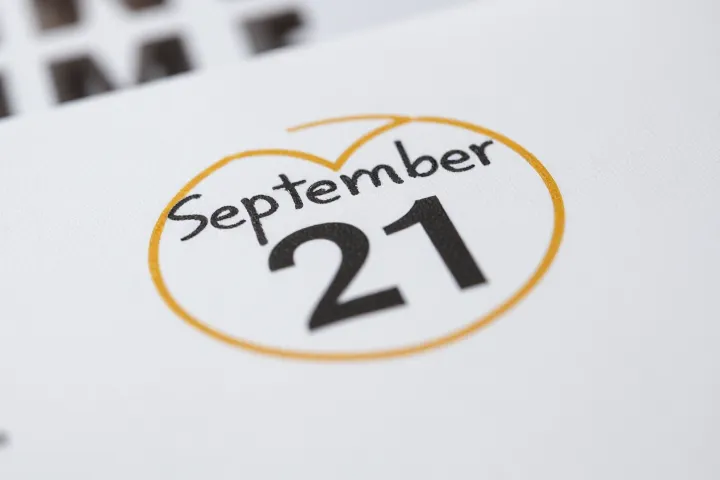
This brings us to the central question that has intrigued fans for decades. What is the significance of the 21st night of September? The theories have been endless: was it the day a baby was born? A wedding anniversary? The day the seasons changed? The truth, as Allee Willis confirmed many times, is far more simple and speaks to the song’s true purpose. As they were writing the lyrics, the line that originally started the song was “Do you remember the 1st night of September?”. But Willis felt it didn’t sing well. They went through all the dates until they landed on the “21st.” The number “21” simply had the best phonetic flow and sounded the best when sung. There is no other historical or personal significance to the date. The magic isn’t in the *what*, but in the *how* it makes you feel.
Expert Insight: A Musicologist on the Science of Joyful Music
” ‘September’ is essentially a perfect storm of positive auditory stimuli,” explains Dr. Chloe Bennett, a fictional musicologist and author specializing in the psychoacoustics of pop music. “The song’s tempo is around 126 beats per minute, which is the optimal tempo to induce a desire to dance. Its consistent use of a major key, combined with the bright timbre of the horn section, activates the brain’s reward centers.” She continues, “The ‘ba-dee-ya’ chorus is a form of non-semantic vocalization, which allows for a release of dopamine without the cognitive load of processing language. It’s a direct shortcut to a feeling of communal joy. It’s not just a happy song; it’s a scientifically brilliant piece of feel-good engineering.” This aligns with real-world research covered by sources like the American Psychological Association on how music impacts mood and behavior.
A Word of Caution and Recommendations
The primary recommendation when approaching “September” is to embrace its spirit rather than getting bogged down in a literal search for meaning. The beauty of the 21st night is precisely that it *doesn’t* belong to a specific person or event, which allows it to belong to everyone. For event planners or DJs, a practical tip is to use the song strategically. While it’s a guaranteed floor-filler, overplaying it can lead to listener fatigue. Its maximum impact is felt when it’s used to create a pivotal, high-energy moment. For example, a corporate event planner might budget an extra $1,000 for a live horn section to play just that one song, creating an unforgettable peak moment for attendees.
Alert: Co-writer Allee Willis often expressed loving frustration that the number one question she was asked, despite her work on hundreds of other hits, was about the 21st of September. This serves as a reminder that a creator’s intent can sometimes be overshadowed by the public’s fascination with a single, catchy detail.
By understanding how this masterpiece was crafted, we can appreciate it on a deeper level. Every time the 21st of September rolls around, you can join the global celebration, armed with the knowledge that the magic is in the music itself, a fact that the band’s official website, earthwindandfire.com, continues to celebrate.
Frequently Asked Questions (FAQ)
What is the real meaning of the “21st night of September”?
According to the song’s co-writer, Allee Willis, the date has no real historical or personal meaning. The line was chosen simply because the number “21st” sounded the best phonetically and flowed perfectly with the melody.
Why did they use the “ba-dee-ya” sound in the chorus?
Maurice White insisted on keeping the “ba-dee-ya” syllables because he felt they perfectly captured the song’s joyful feeling. He famously told his co-writer to “never let the lyrics get in the way of the groove,” knowing the sound itself would be more universal than words.
Who wrote the song “September”?
“September” was written by Earth, Wind & Fire’s founder Maurice White, guitarist Al McKay, and professional songwriter Allee Willis. White and McKay created the musical track, while Willis collaborated with White on the lyrics.
Is the song based on a real story?
No, the song is not based on a single real story. It was intentionally written with vague, evocative lyrics about love and happiness so that anyone could project their own positive memories and feelings onto it.
Why is “September” still so popular today?
Its popularity endures because it is a masterfully crafted piece of “feel-good” music. The combination of an infectious groove, a joyful horn section, universal lyrics, and a simple, singable chorus makes it a timeless anthem of happiness, a fact often chronicled in music magazines like Rolling Stone.
In the end, the question “Do you remember the 21st night of September?” is not a test of memory. It’s an invitation. It’s a call to recall—or create—a moment of pure, uncomplicated happiness. The true do you remember the 21st night of September meaning is that the greatest memories are not always about what happened, but about how a simple song made you feel.