Why you should try a herbal footbath for your acne
In our quest for clear, healthy skin, we often focus on topical creams and complex routines. But what if one of the paths to a better complexion started with your feet? The practice of using a herbal footbath is a time-honored wellness ritual designed to promote relaxation and well-being. While it may not be a direct cure for acne, this soothing practice can help address underlying issues like stress and poor circulation, which are known contributors to skin problems.
Can Soaking Your Feet Really Improve Your Skin? The Connection Explained
The idea that a herbal footbath can influence your skin health, including acne, might seem far-fetched, but it’s rooted in principles of holistic health. The connection isn’t magic; it’s based on how our bodies respond to relaxation, warmth, and the therapeutic properties of plants. The skin on our feet is highly porous and rich in nerve endings, making it an excellent medium for absorption and sensory relaxation.
The Role of Stress and Cortisol in Acne
One of the most significant, well-documented triggers for acne is stress. When you’re stressed, your body produces cortisol, a hormone that can send your oil glands into overdrive and increase inflammation throughout the body. As the American Academy of Dermatology Association (AAD) confirms, this can lead to stress-induced breakouts. The simple, meditative act of a warm herbal footbath can activate the parasympathetic nervous system, helping to lower cortisol levels and mitigate this primary acne trigger.
Improving Circulation for a Healthy Glow
Healthy skin relies on good blood circulation to deliver oxygen and essential nutrients to skin cells and to carry away waste products. Immersing your feet in warm water stimulates blood flow throughout the lower legs and can have a positive, systemic effect on overall circulation. Improved circulation ensures your skin is well-nourished from the inside out, which is fundamental for healing and maintaining a vibrant complexion.
Traditional Wisdom Meets Modern Wellness
Foot soaking is a cornerstone of Traditional Chinese Medicine (TCM), believed to draw energy downward and balance the body. From a modern wellness perspective, we can see this as a practice that grounds us, pulling us out of our racing thoughts and into a state of physical calm. This intersection of ancient ritual and modern stress relief is where the true benefits for skin health lie.

Choosing the Right Herbs for Your Footbath
The magic of a herbal footbath comes alive with the right blend of plants. Each herb offers unique therapeutic properties that can be tailored to your skin’s needs. You can find high-quality dried herbs at local health food stores or online apothecaries.
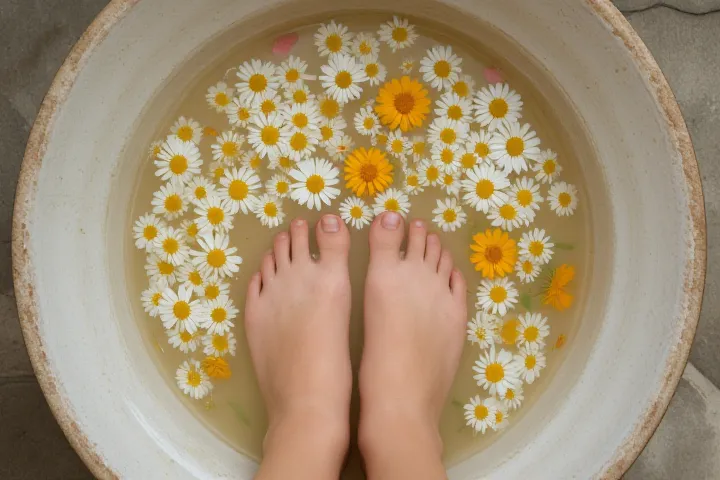
For Calming Inflammation: Chamomile and Calendula
Both chamomile and calendula are renowned for their anti-inflammatory and skin-soothing properties. Rich in antioxidants and compounds like apigenin, chamomile can help calm redness and irritation. Calendula is traditionally used to promote skin repair and healing. Research from sources like the National Center for Complementary and Integrative Health (NCCIH) has explored the calming properties of these botanicals.
For Relaxation and Cleansing Support: Lavender and Epsom Salts
Lavender is the ultimate relaxation herb, known for its ability to soothe the nervous system and ease tension. Its calming scent alone can help lower stress levels. Adding Epsom salt (magnesium sulfate) can help ease muscle tension and soften the skin, creating a perfect base for your herbal infusion.
For Warming and Circulatory Support: Ginger and Cinnamon
Warming herbs like ginger and cinnamon are excellent for stimulating circulation. They create a gentle warming sensation that helps dilate blood vessels, boosting blood flow. This can be particularly beneficial on a cold day or for those who tend to have cold feet.
How to Create the Perfect Herbal Footbath: A Step-by-Step Ritual
Creating your herbal footbath is simple. Treat it as a mindful ritual, not just another task on your to-do list.
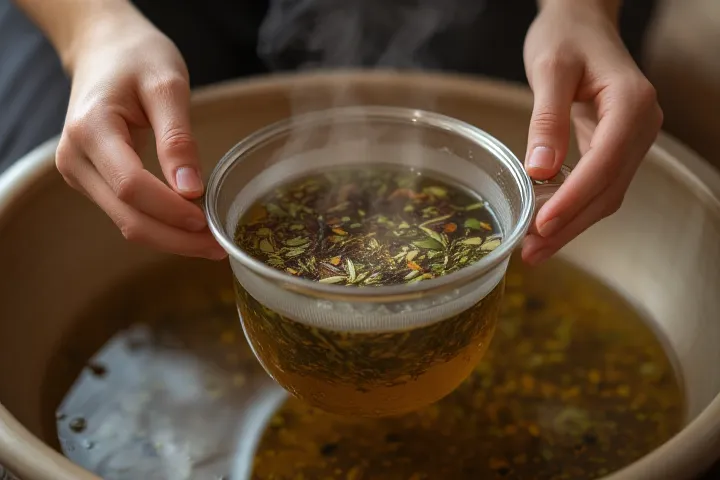
- Prepare Your Infusion: Bring about 8-10 cups of water to a boil. Remove from heat and add a large handful (about ½ cup) of your chosen dried herbs. Cover the pot and let the herbs steep for at least 15-20 minutes.
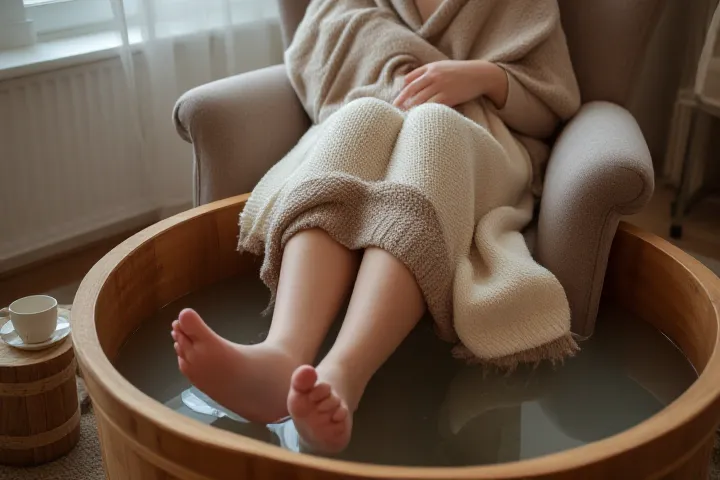
- Set Up Your Space: Find a comfortable chair in a quiet space. Place a basin large enough for both feet on a towel on the floor.
- Strain and Soak: Strain the herbal infusion into the basin. Add warm water until the basin is full enough to cover your ankles and the temperature is comfortably warm, but not scalding. If using, add ½ cup of Epsom salt and stir to dissolve.
- Relax and Rejuvenate: Soak your feet for 15-20 minutes. Close your eyes, breathe deeply, and focus on the feeling of warmth and the aromatic steam.
- Moisturize: After soaking, pat your feet dry and immediately apply a natural oil or rich cream to lock in moisture.
A Micro-Case: Maria’s Weekly Wind-Down for Clearer Skin
Maria, a 29-year-old project manager, struggled with inflammatory acne on her cheeks, which always flared up during stressful work weeks. She decided to incorporate a weekly herbal footbath into her Sunday evening routine, using a blend of lavender and chamomile. Her initial investment in bulk herbs was around $25 (all prices mentioned are illustrative and in US dollars). After a month, she noticed that her Sunday ritual left her feeling calmer and better prepared for the week. While not a direct cure, this consistent stress reduction led to fewer and less severe stress-related breakouts over the next few months.
Expert Insight: An Integrative Medicine Perspective
“A herbal footbath is a classic hydrotherapy technique that leverages the healing properties of water and plants,” explains Dr. Evelyn Reed, a licensed naturopathic doctor (ND) with a focus on integrative dermatology. “It’s a fantastic tool for stress management. While we can’t say it ‘detoxes’ the body in a literal sense, we can say it supports the body’s own detoxification and circulatory systems by reducing the physiological stress load. For skin conditions like acne, which have a clear link to stress and inflammation, this is an incredibly valuable and accessible self-care practice.”
Care, Caution, and Recommendations
While a herbal footbath is generally very safe, there are important considerations. Always perform a patch test with a small amount of the cooled herbal infusion on your skin to ensure you don’t have an allergic reaction. Do not use footbaths on broken skin, open sores, or infected areas. Medical authorities like the CDC advise individuals with diabetes, neuropathy, or severe circulatory issues to consult their doctor before using warm foot soaks, as reduced sensation can increase the risk of burns.
Alert: Certain herbs are not recommended during pregnancy or breastfeeding. Always consult with a healthcare provider or a qualified herbalist before using new herbs if you are pregnant, nursing, or have a pre-existing medical condition.
Incorporating this footbath into your evening can be a powerful act of self-care. To enhance your relaxation routine, explore our guide to mindfulness meditation.
Frequently Asked Questions About Herbal Footbaths
Can a herbal footbath really help my acne?
Indirectly, yes. By significantly reducing stress and improving circulation, a herbal footbath can help mitigate two of the key underlying triggers of inflammatory acne. It should be seen as a supportive practice within a broader skincare and wellness routine.
How often should I do a herbal footbath for skin benefits?
For best results, consistency is key. Aim for a 15-20 minute soak two to three times per week. This regularity helps maintain lower stress levels and supports consistent circulatory benefits.
What are the best herbs to use for skin inflammation?
Chamomile, calendula, and green tea are excellent choices. They are rich in anti-inflammatory compounds and antioxidants that can help soothe the skin systemically. You can use them individually or create your own blend.
Are there any risks or side effects I should know about?
The primary risks are burns from water that is too hot and potential allergic reactions to herbs. Always test the water temperature and perform a patch test. People with certain medical conditions, especially diabetes, should consult their doctor first.
Can I just use essential oils instead of dried herbs?
You can, but it requires caution. Essential oils are highly concentrated and must be diluted properly in a carrier oil (like coconut or jojoba oil) and a solubilizer before adding to water to prevent skin irritation. Using dried herbs to create an infusion is often a gentler and safer method for beginners.
Ultimately, adopting the ritual of a herbal footbath is an act of prioritizing your well-being. By taking time to calm your nervous system and support your body’s natural functions, you are creating an internal environment that is more conducive to healthy, clear skin. For more information on the benefits of herbs and botanicals, trusted resources like the American Herbal Products Association and government sites like NIH’s Office of Dietary Supplements offer valuable insights.